How to Write a Full Body OC Prompt That Never Crops the Legs
A full body oc prompt that stops cropping: the exact word order, framing tags, and three copy-paste anime OC templates for school, fantasy, and streetwear.

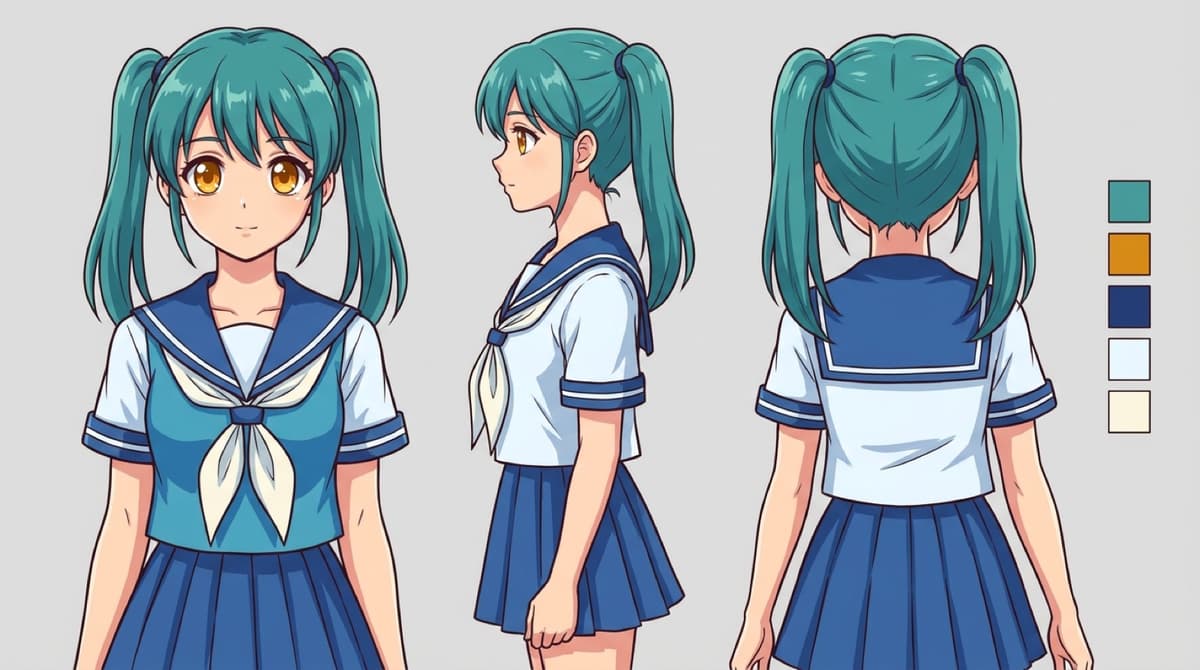
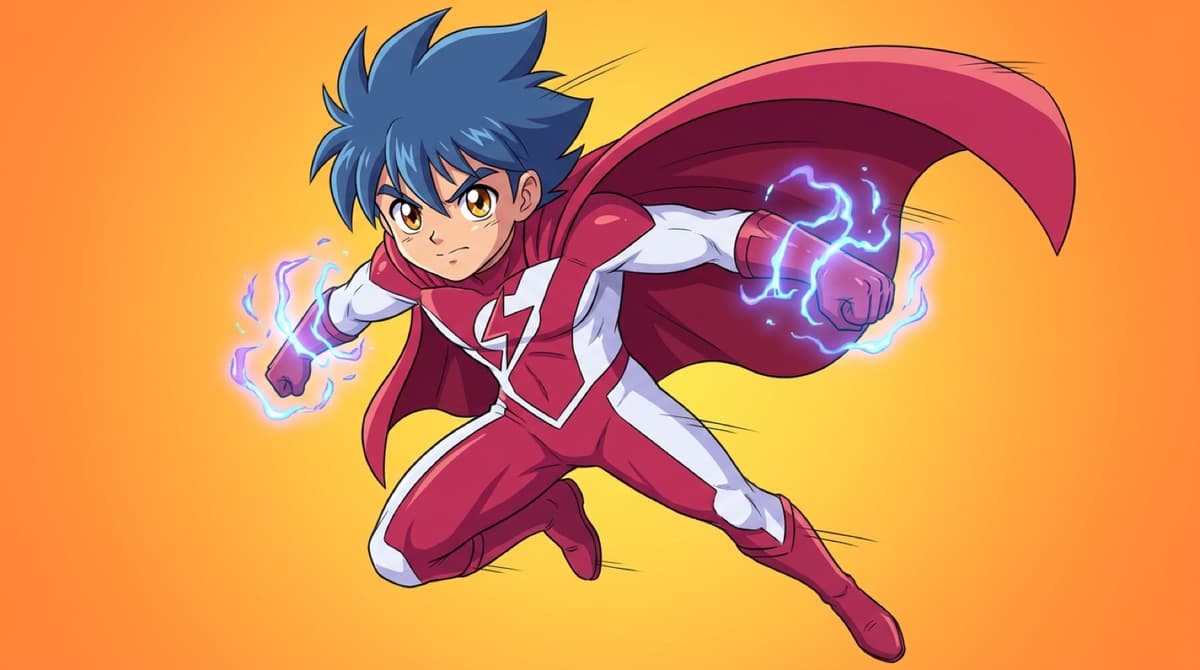
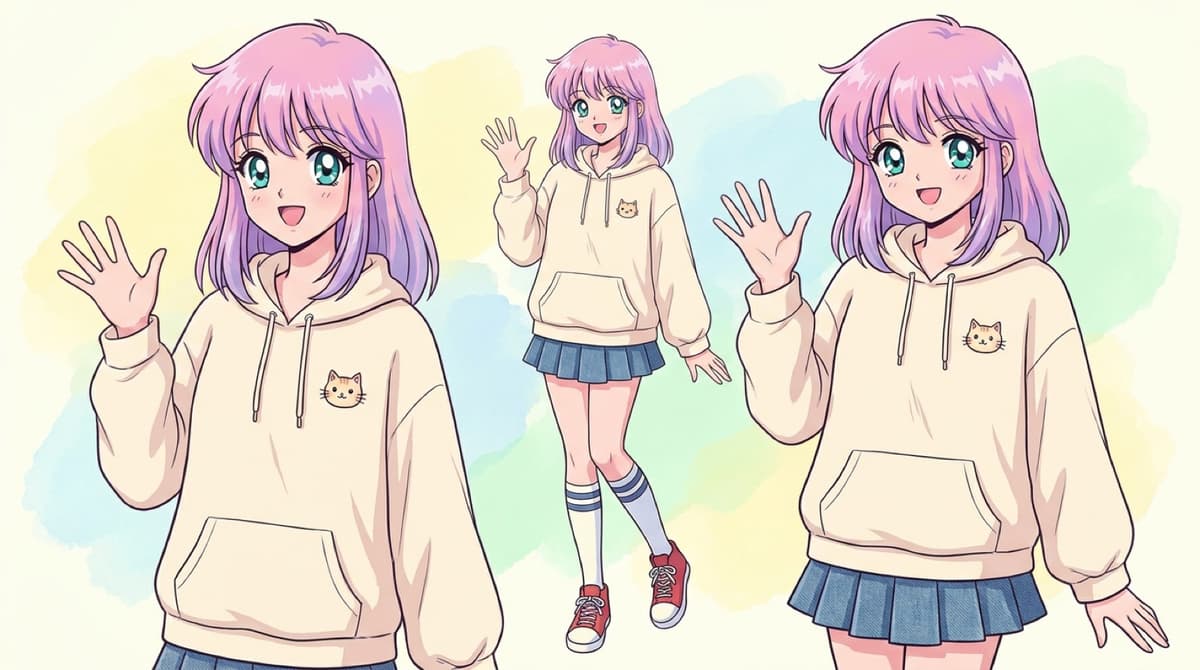
If you have ever typed a perfect character description into an AI image tool and gotten back a gorgeous portrait that stops at the knees, this one is for you. The single most common failure in AI OC art is not bad faces or weird hands. It is cropping. Your character has no legs, no shoes, sometimes no waist. A good full body oc prompt fixes that, and it is mostly about word order and framing, not luck. Below I will walk through the exact anatomy I use, why the framing words matter, and three copy-paste templates you can run right now.
Why your full body oc prompt keeps getting cropped
Image models guess composition from your words. If you describe a face in loving detail and never mention feet, the model assumes a close-up is what you want, because that is what most training images of "beautiful anime girl, blue eyes" actually are. The model is not ignoring you. It is filling a gap you left open.
So the trick to a reliable anime oc prompt is twofold. Describe the whole character head to toe, and then tell the model the shot you want in plain framing language. Order matters too. Models weight earlier words more heavily, so the structure of your prompt is doing real work before you ever hit generate.
Here is the order I follow every time.
The anatomy of a reliable prompt
- Subject and identity. One girl, one boy, an anthro fox, whatever. State the count and the core read first:
1 girl, original character, cheerful tomboy. - Hair and eyes. The instant-recognition stuff:
short messy auburn hair, golden eyes. - Outfit, top to bottom, and never skip footwear. This is where most people quit too early. List the top, the bottom, AND the shoes:
oversized green hoodie, black pleated skirt, white knee-high socks, chunky white sneakers. - Pose and framing. The part people forget:
full body, head to toe, standing pose, both feet visible. - Art style.
cel-shaded anime, flat vibrant colors, clean line art. - Background. Keep it simple for a character reference:
plain pastel gradient background. - Quality and detail. A light touch at the end:
high detail, sharp focus.
That footwear line in step 3 is not optional. "No shoes mentioned" is one of the top reasons feet end up cut off or rendered as a vague blur. If you want clean ankles and visible sneakers, you have to say so.
Why the framing words actually do something
People assume "full body" alone is enough. It usually is not. The model reads "full body" as a soft hint and still crops if your pose words pull it toward a dramatic angle. Stacking a few framing phrases gives it nowhere to hide. I use full body, head to toe, both feet visible, standing as a little combo. Each phrase reinforces the same instruction from a different direction, and together they lock the camera back far enough to fit the whole character.
Pose choice matters here too. A "dynamic action pose" or "low angle shot" fights you, because those framings naturally crop. A plain standing or three-quarter pose shows off the outfit, the shoes, and the silhouette without hiding anything behind a foreshortened arm. If you want a clean reference sheet, boring framing is your friend.
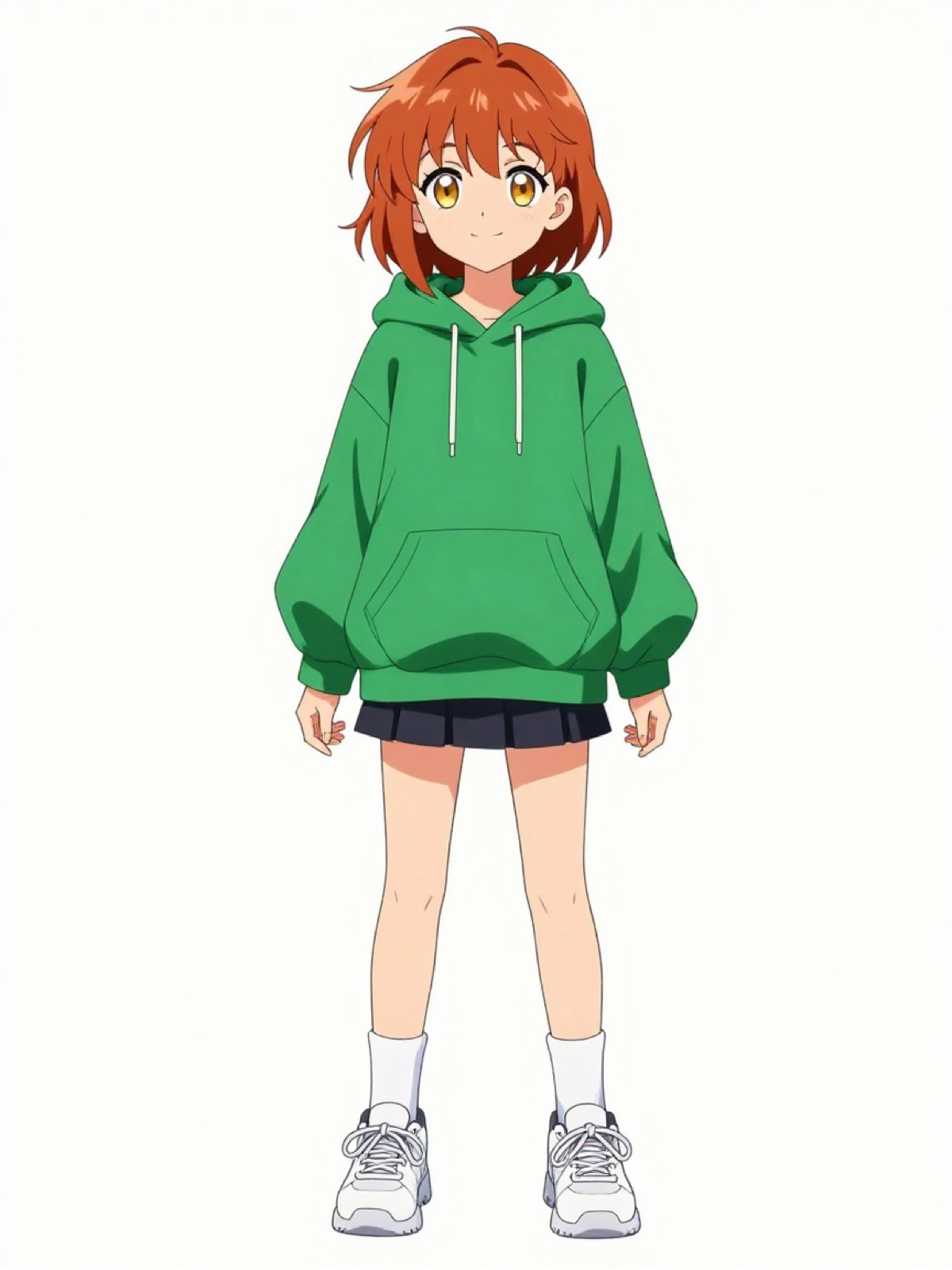 Full-body anime OC standing illustration with both feet and shoes visible
Three copy-paste full body oc prompt templates
Each of these is filled in and ready to run. Swap the descriptive words for your own character and keep the framing and quality lines intact. That is the part doing the heavy lifting.
A school-uniform OC:
1 girl, original character, gentle bookish honor student, long straight black hair with blunt bangs, deep violet eyes, navy sailor school uniform with red neckerchief, white short-sleeve blouse, pleated navy skirt, white thigh-high socks, brown loafers, holding a satchel, full body, head to toe, both feet visible, standing pose, soft smile, cel-shaded anime, flat vibrant colors, clean line art, big glossy eyes, plain pale blue gradient background, high detail, sharp focus
A fantasy-armor OC:
1 boy, original character, young confident knight, windswept silver hair, sharp teal eyes, ornate silver plate armor with gold trim, deep blue tabard, layered leather gauntlets, fitted dark trousers, tall armored greaves, sturdy brown leather boots, one hand resting on a sheathed sword, full body, head to toe, both feet visible, standing heroic pose, cel-shaded anime, flat vibrant colors, clean line art, big expressive eyes, simple stone courtyard background, high detail, sharp focus
A streetwear OC:
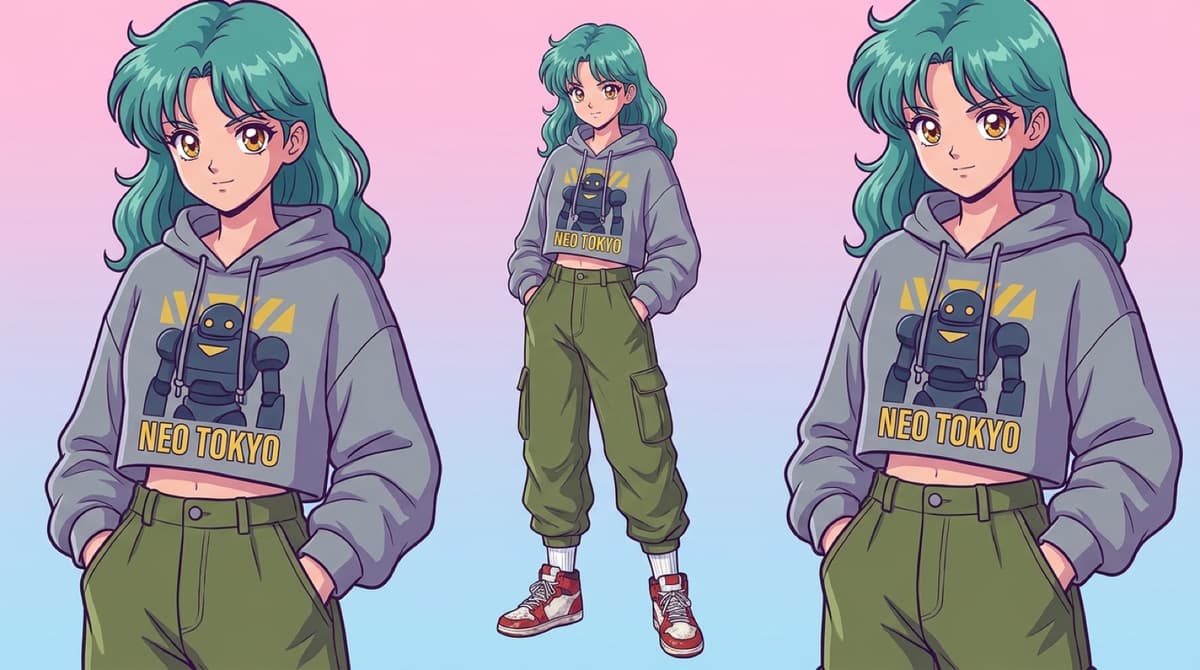
1 girl, original character, laid-back skater with attitude, shoulder-length wavy teal hair, amber eyes, cropped oversized graphic hoodie, baggy cargo pants, layered chain necklace, white tube socks, scuffed high-top sneakers, hands in pockets, full body, head to toe, both feet visible, casual standing pose, cel-shaded anime, flat vibrant colors, clean line art, big glossy eyes, plain warm gradient background, high detail, sharp focus
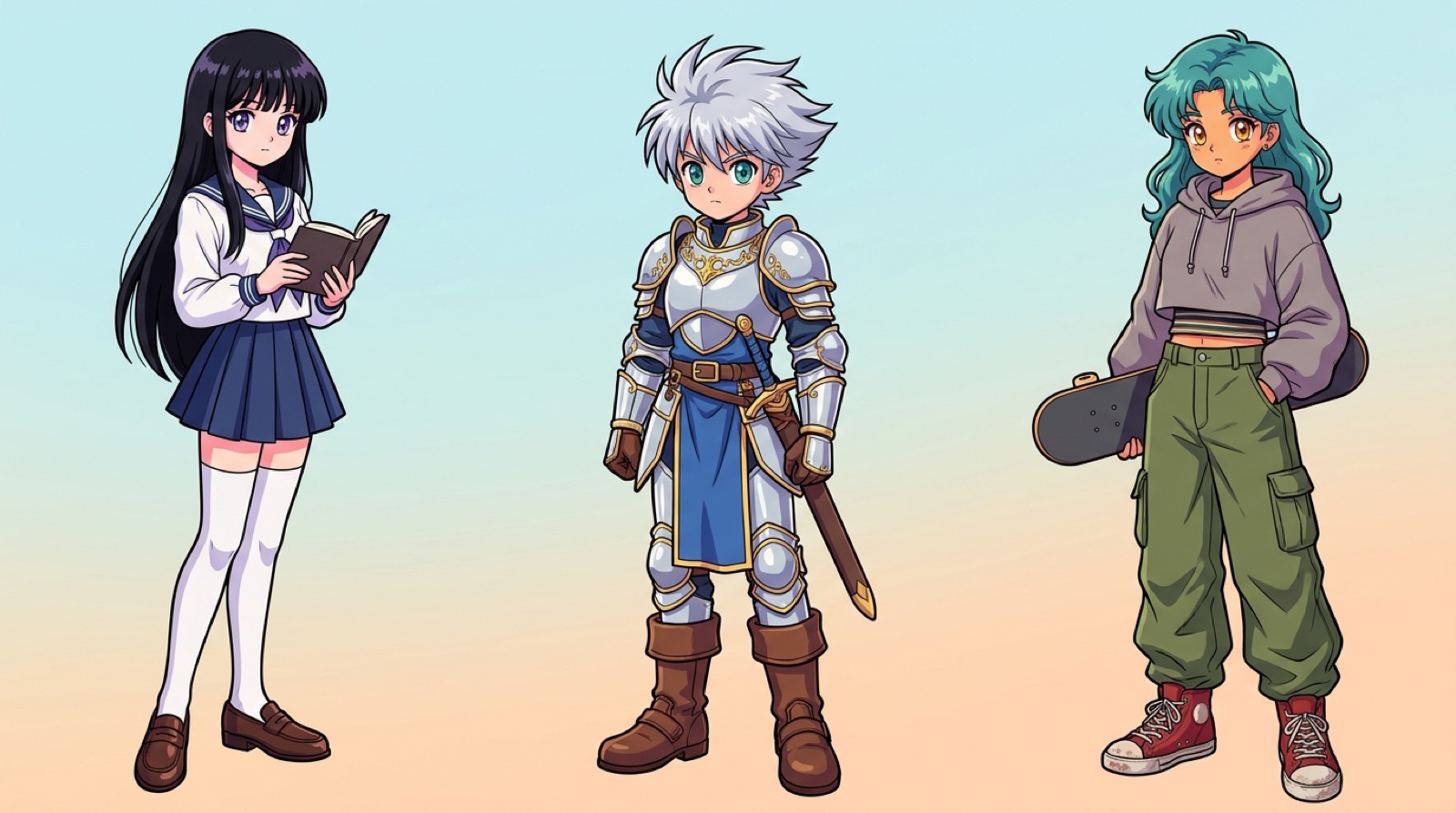 Three full-body anime OC variations: school uniform, fantasy armor, and streetwear
Notice the shape is identical across all three. Identity, hair and eyes, outfit top to bottom with shoes, framing combo, style, background, quality. Once that skeleton is muscle memory, designing a new OC is just filling in the blanks. If you would rather skip the typing, the full-body OC maker runs this exact structure under the hood.
Common mistakes that wreck a full body oc prompt
- Vague outfit words. "Cool outfit" or "fantasy clothes" lets the model invent something random and often inconsistent run to run. Name the actual garments.
- Skipping footwear. The fastest way to lose the bottom of your image. Always name the shoes.
- Conflicting style tags. "Cel-shaded anime" plus "photorealistic" plus "oil painting" cancel each other out and you get mush. Pick one lane.
- Cinematic framing on a reference shot. "Low angle, depth of field, bokeh" looks pretty and crops your character. Save it for hero art, not your design sheet.
- Burying the important stuff. If the silhouette read lives at the end of a 60-word prompt, the model underweights it. Front-load identity and outfit.
- Background overload. A busy scene steals attention and pixels from the character. Keep it plain when you are designing.
Learning how to make a full body OC this way is repeatable. It is not a magic incantation, just a checklist you run every time, and the cropping problem mostly disappears once footwear and framing become automatic.
If fighting the camera gets old, this is exactly the problem an anime oc prompt generator is built to solve. OCboard bakes the full-body framing straight into every generation, so "head to toe, both feet visible" is on by default and you can spend your energy on the character instead of the crop. You can try it on the full-body OC page without memorizing a single framing tag.
FAQ
Why does my AI OC get cropped at the legs?
Because the model defaults to a portrait crop unless you explicitly ask for the whole figure. Most training data tagged with character descriptions is upper-body, so without framing words the model assumes that is what you want. Add full body, head to toe, both feet visible, standing and name your character's shoes to push the camera back.
What's the best prompt order for a full-body OC?
Go identity, then hair and eyes, then outfit from top to bottom including footwear, then pose and framing, then art style, then background, then quality. Earlier words get more weight, so put the silhouette-defining details up front and keep decorative extras near the end.
Do I really need to mention shoes in the prompt?
Yes, more than you would think. Unmentioned footwear is a leading cause of cut-off feet and blurry ankles. Naming the exact shoes, like chunky white sneakers or brown leather boots, gives the model a reason to draw the bottom of the image and keeps your full body framing intact.
Why do conflicting style tags ruin my image?
Style tags compete for the same pixels. When you mix cel-shaded anime, photorealistic, and oil painting in one prompt, the model averages them into a muddy in-between that satisfies none of them. Choose a single style direction and let the rest of the prompt describe the character.
Ready to stop fighting the crop? Drop your character into the full-body OC maker and watch the framing handle itself.