OC Reference Sheet Template: Build One That Artists Love
A practical oc reference sheet template: the full-body turnaround, expression set, hex palette, and a copy-paste field list you can fill in today.

You designed an OC in your head, gave her a name, maybe a tragic backstory and a signature jacket. Then a friend offers to draw her, asks "what does she look like?", and you realize you only have vibes. That gap is exactly what an oc reference sheet template fixes. It pins down your character on one page so anyone (including future-you) can draw her the same way twice.
What an OC reference sheet actually is
A reference sheet (ref sheet for short) is the single source of truth for your original character. One page, sometimes two, that shows the full body from a few angles, the exact colors, the small details people get wrong, and a couple of facial expressions. It is not concept art and it is not your best illustration of the character. It is documentation that happens to look nice.
People build them for very practical reasons. Commission artists ask for one before they start, because guessing your character's eye color and getting it wrong wastes everyone's time. VTubers hand a character reference sheet template to their Live2D rigger so the model matches the design. Writers keep one taped above the desk so the redhead stays a redhead in chapter 12. And if you ever run an art trade or open commissions yourself, a clean sheet is the difference between five clarifying DMs and zero.
The anatomy of a good sheet
Strip away the decoration and a strong sheet has the same bones every time.
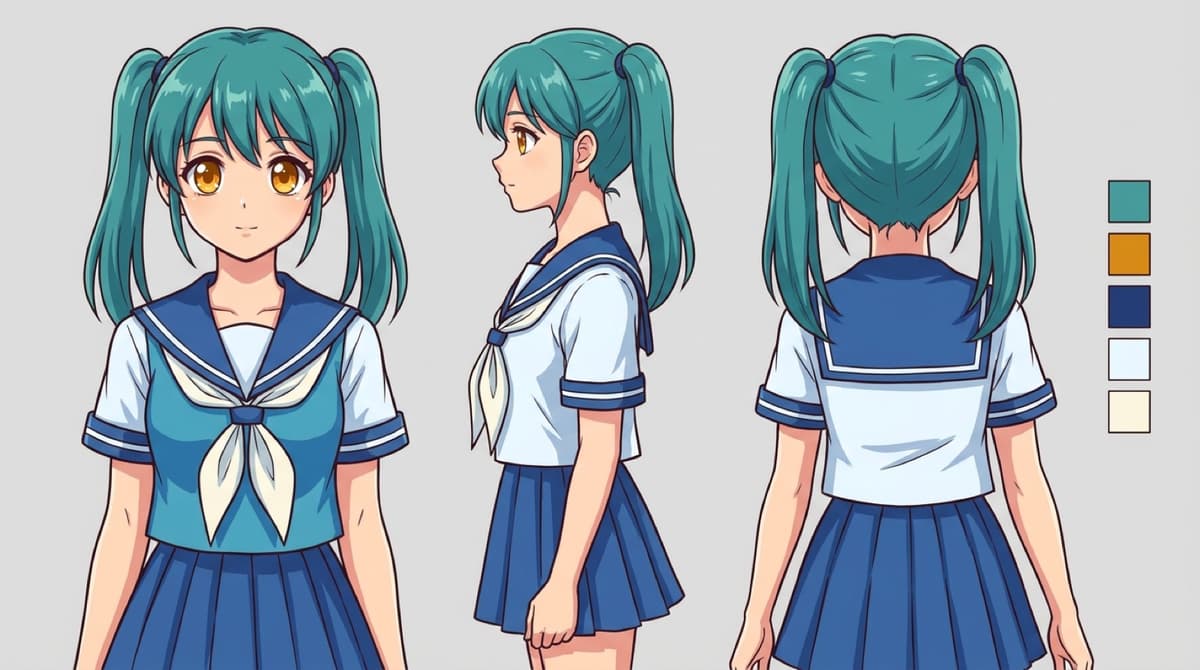
Full-body turnaround. The core of any character turnaround template is the same character drawn from multiple angles: front, three-quarter, and back at minimum. Front shows the silhouette and the face. The 3/4 sells how the design reads in motion. The back catches everything a front view hides (a cape clasp, a tattoo, how the hair is tied). Three views is the working standard; add a side view if the outfit is complicated.
Expression set. Four to six faces covering the emotional range: neutral, happy, angry, sad, plus one or two that are specific to the character (smug, flustered, dead-eyed). This tells an artist how the character emotes, not just how she looks at rest.
Color palette with hex swatches. Little labeled squares for skin, hair, eyes, primary outfit, accent, metal. Write the hex codes. "Light blue" gets interpreted ten different ways; #A8D8EA does not.
Close-up callouts. Zoom panels for the parts that need precision: how the hair part works, the earring design, the rune on the sword, the laces on the boots. These are the details people fudge when they are guessing.
Height and proportion notes. A height marker (with another character or a simple scale), plus head-count proportions if it matters. A chibi and a tall swordsman should not be drawn at the same scale.
Do / don't notes. Short, blunt. "DO keep the scar over the left eye. DON'T give her a visible nose bridge. Bangs always cover the right eyebrow." This section saves more revisions than anything else on the page.
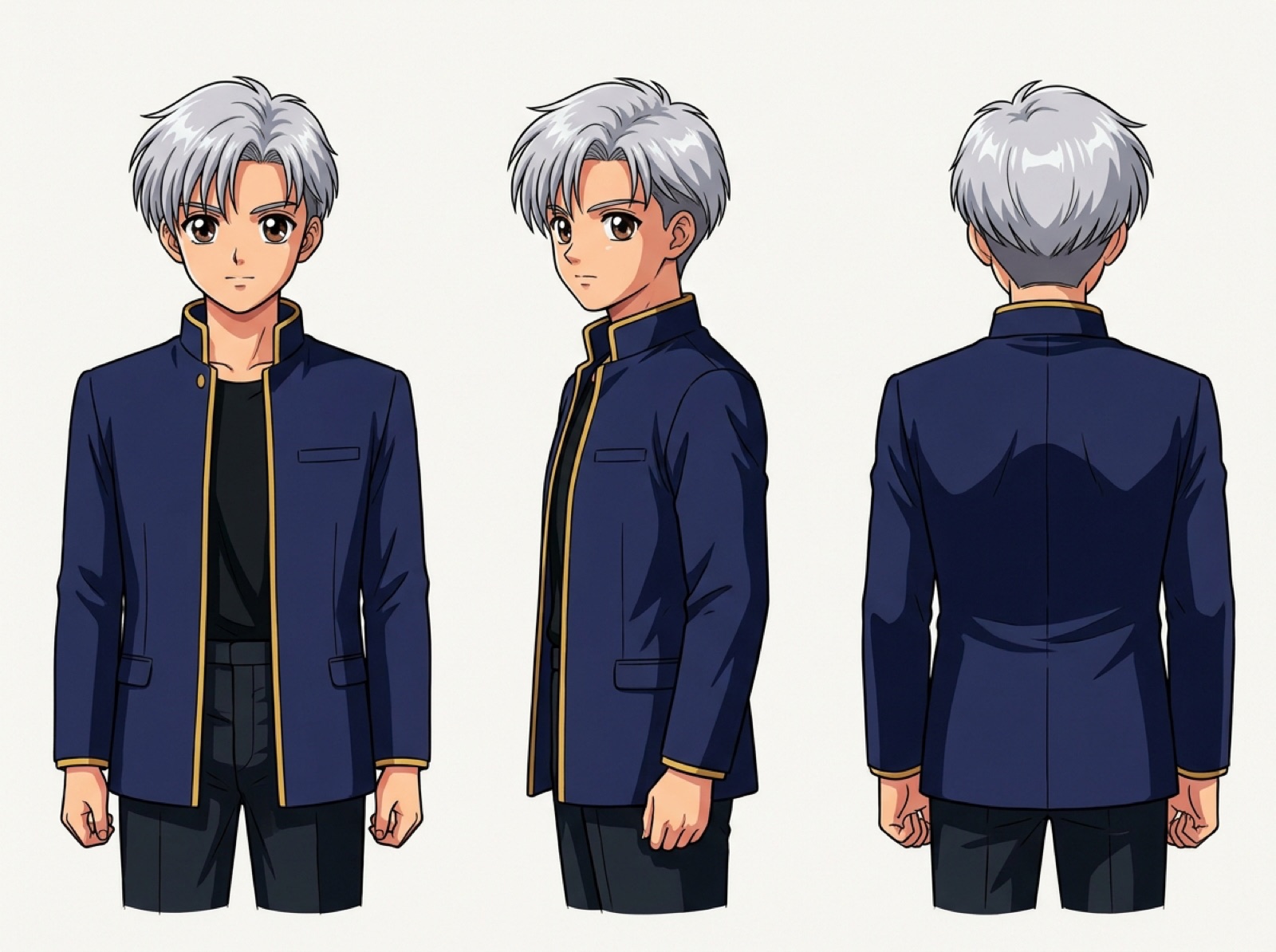 Anime OC turnaround reference sheet showing front, three-quarter and back views
A fill-in template you can copy
Here is the field list I actually use. Copy it, paste it into a doc, fill the blanks, and you have the text half of your sheet done before you draw a single line.
- Name / nicknames:
- Age (or apparent age) / species:
- Height + build: (e.g. 168cm, slim with broad shoulders)
- Hair: color (hex), length, style, part side
- Eyes: color (hex), shape (sharp / round / droopy)
- Skin tone: hex
- Default outfit: top, bottom, shoes, layers
- Palette swatches: skin / hair / eyes / main / accent / metal (hex each)
- Signature accessories: (the 1-3 things she's never without)
- Weapon / prop: with a close-up note
- Distinguishing marks: scars, freckles, tattoos, heterochromia
- Expressions to include: neutral, happy, angry, + 1 character-specific
- Personality in 3 words: (guides the expressions and pose)
- DO list: non-negotiable details
- DON'T list: common mistakes to avoid
The text alone is genuinely useful. Email that block to a commission artist and you have already saved a round of questions.
How to skip the blank-page problem
The text is the easy half. The hard half is the blank canvas: getting a clean full-body base and a turnaround you can actually trace or paint over. If you can't draw the turnaround yourself (or just don't want to spend a weekend on linework before the real design work starts), generate the base.
Feed the fields above into an anime OC generator and let it produce the standing illustration first. With OCboard you can generate a full-body OC base from that same description: head-to-toe, consistent proportions, flat cel-shaded anime style rather than that mushy semi-realistic AI look. From there you build the sheet around it.
A workflow that works well:
- Write the fields. Lock the palette before anything else.
- Generate a clean front-facing full-body base from the description.
- Generate the 3/4 and back views to assemble the character turnaround.
- Drop the views into a one-page layout, add your hex swatches and callouts.
- Sketch or generate the expression set last, once the face is settled.
You end up with a sheet that looks intentional instead of one where the back view secretly contradicts the front. When the base proportions come from one consistent source, the whole page lines up. The full-body OC maker is meant exactly for this first step, so you are decorating a finished base instead of fighting a white page.
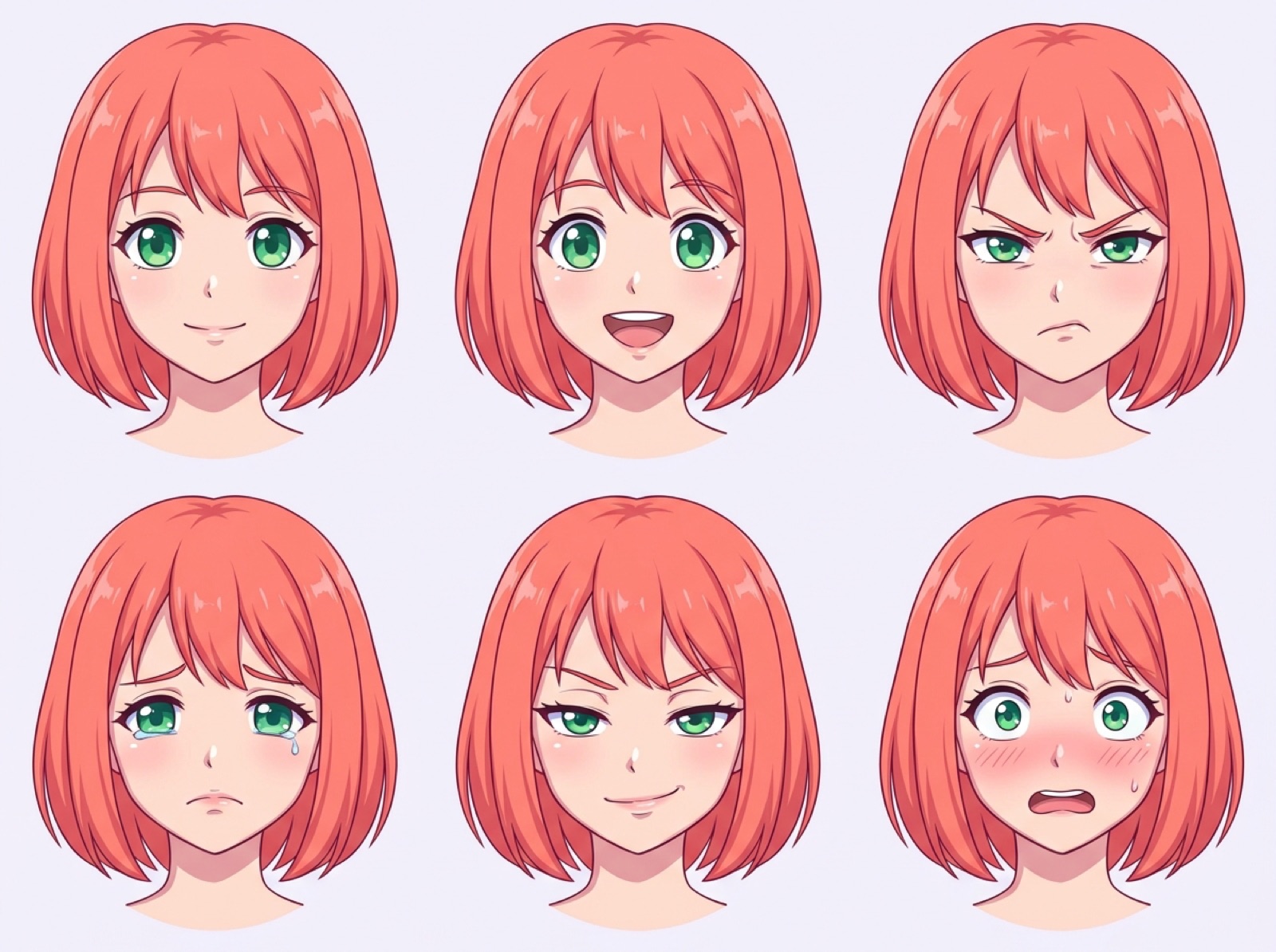 Expression sheet for an anime original character with six face variations
One last thing: keep the sheet boring on purpose. No dramatic lighting, no action pose as the main view, neutral background. A ref sheet is read, not admired. Save the cinematic angle for your actual illustration and let the sheet do its quiet job.
FAQ
What should an OC reference sheet include?
At minimum: a full-body front view, a back view, a color palette with hex codes, and the character's name and key stats. A strong sheet adds a 3/4 view, four to six expressions, close-up callouts for tricky details, a height marker, and a short do/don't list. Keep the pose neutral so the design reads clearly.
How many views does a turnaround need?
Three is the practical standard: front, three-quarter, and back. That covers the silhouette, how the design moves, and everything hidden behind the character. Add a true side view if the outfit has layers, asymmetry, or a back-mounted weapon that a 3/4 view doesn't fully explain.
Do I need to draw to make a ref sheet?
No. You can write the full text template yourself and generate the full-body base and turnaround views, then arrange them into a one-page layout. Plenty of creators who can't draw still maintain tidy, accurate sheets this way and hand them straight to commission artists.
What's the difference between a ref sheet and concept art?
Concept art explores who the character could be; it can be loose, moody, and inconsistent on purpose. A reference sheet locks one final version down for repeatable drawing, with flat lighting and exact colors. You make concept art to decide, and a ref sheet to commit.
Got a character living rent-free in your head? Start with a clean full-body base, build the sheet around it, and hand your artist something they can actually draw from on the first try.